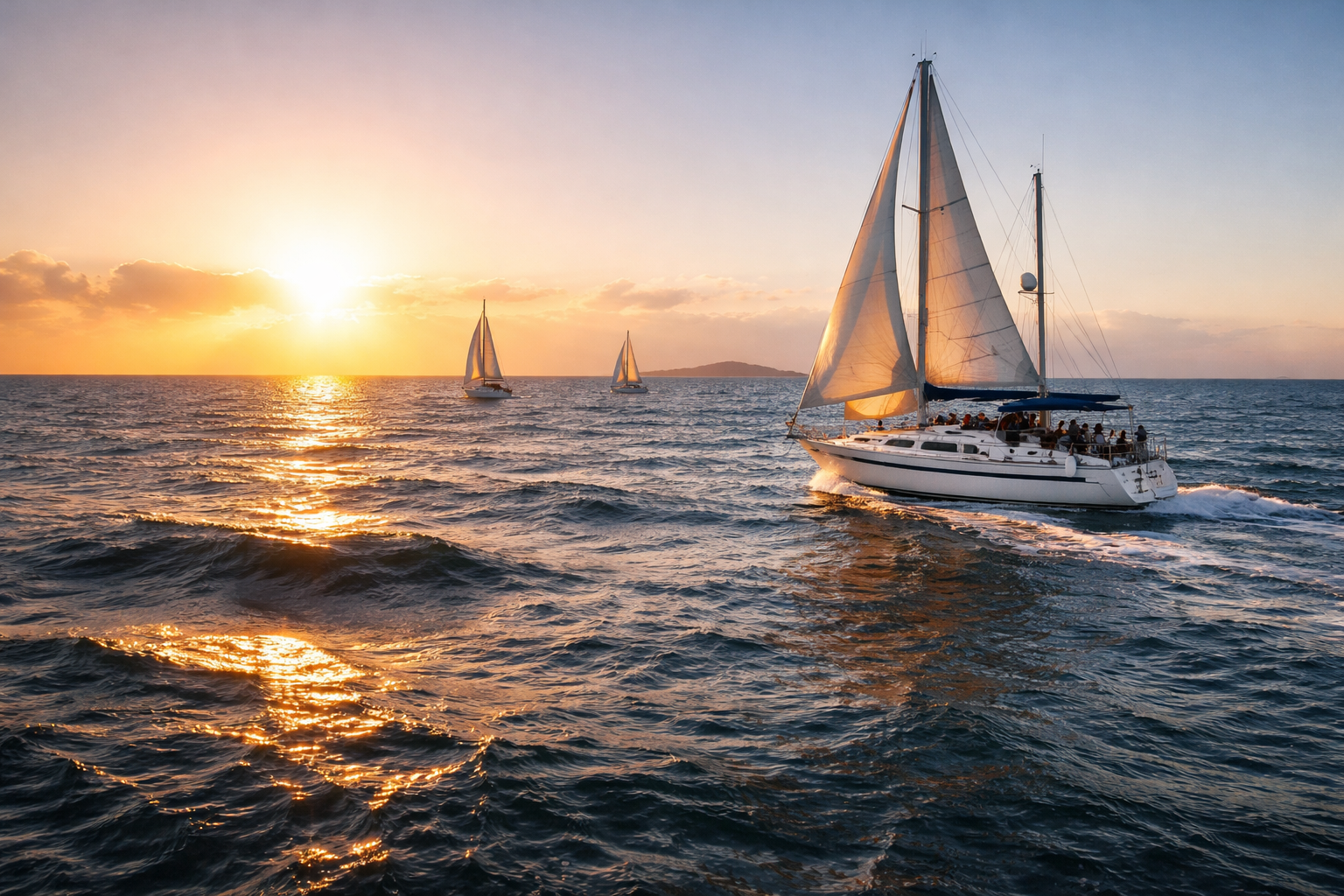
Sailboats crossing the ocean at sunset during a Bahamas sailing expedition from Florida in flotilla formation

Bahamas Expedition Group

Bahamas Sailing Expedition

Captain-led flotilla support for sailors ready to cross from Florida to the Bahamas with more clarity, better judgment, and real-world offshore mentorship.

Format Small, captain-led flotilla
Focus Weather, timing, judgment, and real passage support
Best For Boat owners preparing for a meaningful first crossing

What this is

This is a small, captain-led sailing flotilla from Florida to the Bahamas.

You bring your boat. You remain in command of your boat. You make your own decisions.

But you are not doing the crossing in isolation.

Each expedition is built around the part most people underestimate: not just the miles, but the interpretation. The weather window. The departure timing. The real-world compromises that start to appear once the plan leaves the chartplotter and becomes a live decision.

  • Weather-window analysis and departure guidance
  • Passage planning and routing support
  • Crossing coordination for the group
  • Real-time support while underway
  • Arrival, anchoring, and post-crossing integration

This is not instruction from a classroom. It's judgment, applied in the real world.
Who this is for

Sailors at the edge of "almost ready."

You may already have the boat. You may already have the route. You may even have the basic knowledge. What you want is a little more margin, a little more confidence, and a structure that helps you make the crossing well rather than simply make it across.

This is a strong fit if:

  • You're planning your first Bahamas crossing
  • You've sailed, but not offshore in a meaningful way
  • You want support without being handheld
  • You value understanding over rote instruction
  • You want to learn while sailing your own vessel

This also works well for:

  • Solo sailors who want more margin
  • Cruisers transitioning to longer passages
  • Boat owners who have delayed the crossing for too long
  • Sailors who know the difference between theory and reality

What you get

Not a script. A practical framework.

Not a rigid script. Not a one-size-fits-all formula. But a practical framework you can actually use.

Daily Weather Briefings

Clear, grounded updates that focus on trend, timing, and what actually matters for the crossing.

Real-Time Support

Context when the window tightens, the timing shifts, or the plan needs to be adjusted underway.

Route & Anchoring Guidance

Support for the whole sequence, not just the Gulf Stream crossing itself.

Group Coordination

The value of a flotilla is not just company. It's better timing, shared context, and more margin.

A typical expedition flow

No two crossings are identical.

The route, timing, and rhythm will always answer to weather first. But most expeditions follow a similar arc.

Before Departure

  • Window assessment
  • Vessel readiness and expectations
  • Route and timing discussion
  • Go / no-go decisions

During the Crossing

  • Coordinated departure
  • Group communication
  • Ongoing weather and passage support
  • Real-time adjustments as needed

At Landfall

  • Arrival sequencing
  • Anchoring guidance
  • Debrief and regroup

In the Islands

  • Short passages and movement strategy
  • Anchorage judgment
  • Real-world navigation decisions

Why this is different

This is not a guided tour. And it's not a sailing school.

You won't be treated like cargo. You also won't be fed canned instruction and sent on your way pretending that constitutes experience.

The point here is different.

It's about building judgment — not following instructions.

You'll understand why the decision matters, what changes it, and where the real risk actually lives. The crossing becomes more than a destination. It becomes a framework you can carry into the next one.

That same thinking runs through the broader writing on Sailing ETSIA — especially in Between the Map and the Wind, Solo Sailing, and Where Models Break. This expedition is simply that same way of thinking, applied in real time.

Built on real experience

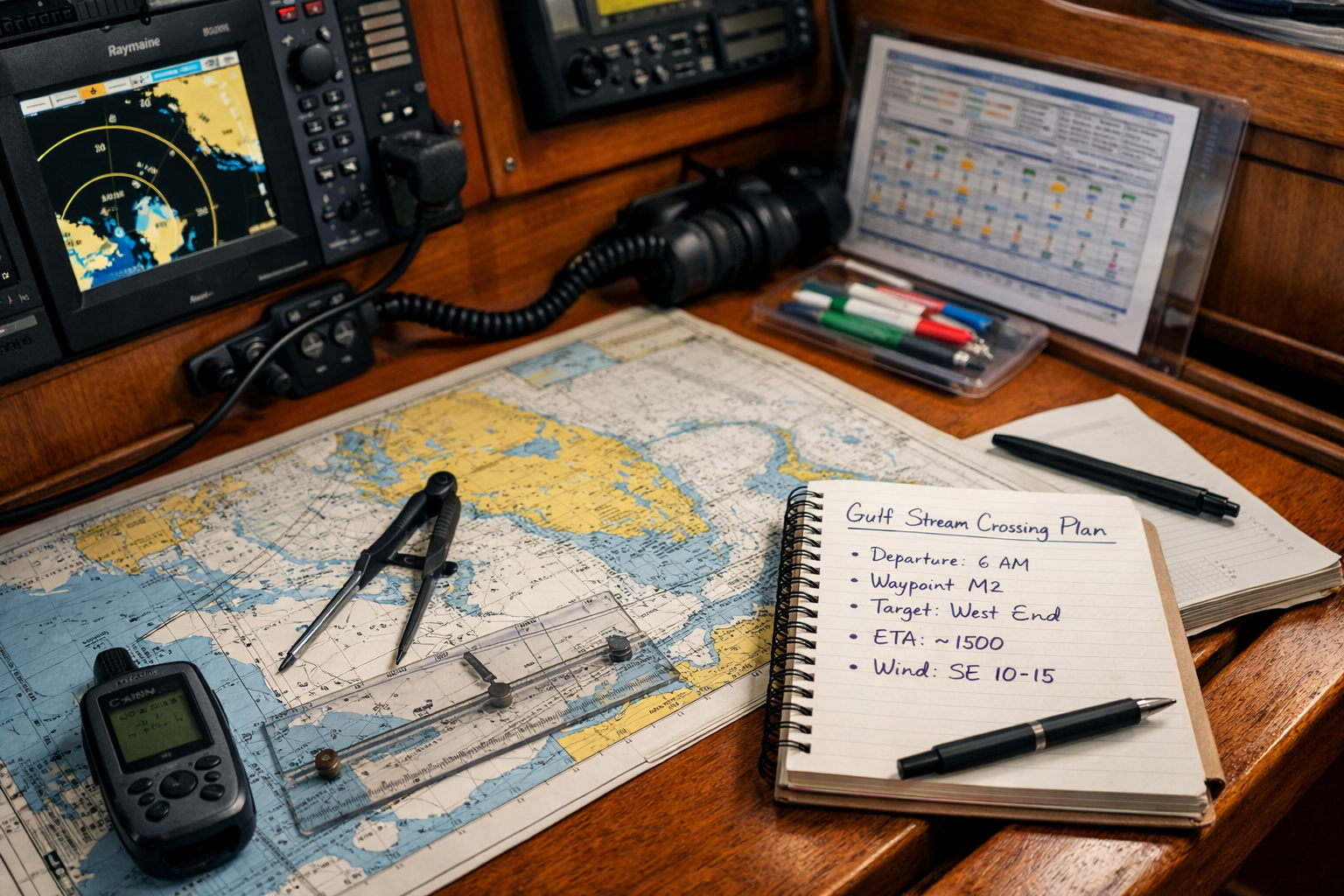
Navigation station aboard a cruising sailboat with Bahamas charts, notebook, and planning tools used for a Gulf Stream crossing

Passage planning is not a single decision — it's a series of small ones that start before you ever leave the dock.

This isn't theory.

It comes from full-time liveaboard sailing, offshore passages, weather windows that were not perfectly tidy, and decisions made with limited margin aboard a real cruising boat.

The perspective behind this expedition is shaped aboard a Nauticat 44 pilothouse ketch — not in a classroom, and not from a dockside fantasy version of offshore life.

That matters, because people do not need more recycled crossing advice. They need better judgment, clearer timing, and support that still leaves them in command of their own vessel.

Crossing decision window

Not every "go" day is equal.

A crossing can be technically possible long before it is wise, and still technically possible after the best of the window has already passed. What matters is not just whether you can go, but where you are inside the shape of the window when you do.

This is the core idea behind the expedition: good crossings are rarely about bravado. They're about recognizing where the real window begins, where it starts to tighten, and how much margin you actually have when you commit.

What people say

The crossing is only part of the value. For many people, the real shift is what happens to their confidence, timing, and decision-making once they've done it properly.

"I met Kory at the Fort Pierce City Marina while we were preparing to head to the Bahamas. We were inexperienced and unsure how to go about the crossing. He answered our questions and helped us feel confident every step of the way.

We had a great time, learned a lot, and ended up exploring the Bahamas together as friends. I'd absolutely recommend this to anyone thinking about making the trip. ⭐⭐⭐⭐⭐"

— Randy Frederick (North Bay, Ontario, Canada)

Expedition options & pricing

Core Expedition

$2,495

per vessel

For boat owners joining the crossing and group support framework.

Includes
  • Pre-departure planning
  • Weather-window guidance
  • Group coordination
  • Crossing support
  • Arrival debrief

Expedition + Prep

$3,250

per vessel

For owners who want more structured help before departure.

Everything in Core, plus
  • Additional prep calls
  • Readiness review
  • Route/timing consultation
  • More individualized support

Private / Custom

Custom

quoted by scope

For owners wanting a more tailored level of support, scheduling, or private mentorship.

Possible options
  • Custom departure timing
  • Private weather review
  • One-on-one expedition planning
  • Extended mentorship

Not included: fuel, marina fees, customs and entry costs, food, vessel operating expenses, or other owner-specific cruising costs.

The route

Most expeditions originate from South Florida and cross into the Bahamas with routes adapted to weather, vessel mix, and conditions at the time.

There is no fixed, one-size-fits-all itinerary. That's part of the point. Good crossings are shaped by real conditions, not brochure logic.

Frequently asked

Do I need offshore experience?

No — but you should be comfortable handling your vessel and ready to learn in real conditions.

Do I bring my own boat?

Yes. This is a flotilla-style expedition. Each participant sails their own vessel.

Is this a course or certification program?

No. This is applied experience and real-world mentorship, not a formal certification course.

What size boats are suitable?

Typically cruising sailboats capable of offshore passage. Specific suitability can be discussed before departure.

What's included?

That depends on the option selected, but generally includes weather analysis, planning support, group coordination, and real-time guidance throughout the expedition.

Join the next expedition

Ready to actually go?

If you're at the point where it's no longer about reading or watching or planning — and you're ready to actually go — this is where that transition happens.

You bring the boat. You bring the responsibility. I help bring the context, the structure, and the judgment that makes the crossing better.