
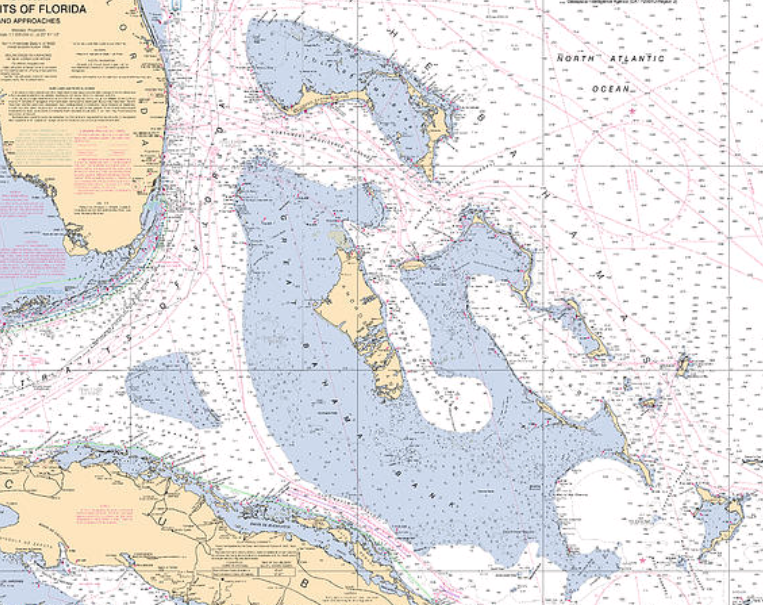
Bahamas crossing guide · 7 guides

The Bahamas Sailing Guide

If you are planning to sail from Florida to the Bahamas, most of the hard parts are not about distance. They are about timing, judgment, sea state, preparation, and knowing which decisions matter before the boat leaves the dock.

Jump to the guides ↓

Start here

A Florida-to-Bahamas crossing is often described as if it were simple: pick a calm day, point east, and go. Sometimes it is that simple. Often it is not.

The crossing itself may only be a small part of the overall trip, but it concentrates several decisions into a short period of time: departure timing, weather interpretation, Gulf Stream behavior, night arrival risk, fatigue, vessel readiness, and how much margin you really have when conditions are no longer theoretical.

The purpose of this guide is not to make the crossing sound dramatic. It is to make it legible. Good passages are rarely built on bravado. They are usually built on restraint, preparation, and a realistic read on what the window is actually offering.

The seven guides

What sailors ask before the first crossing.

  1. Guide 01

    Sailing to the Bahamas from Florida

    Start here for the big-picture view: departure areas, crossing logic, preparation, and what the overall trip demands from both boat and crew.

  2. Guide 02

    Best Time to Sail to the Bahamas

    The calendar matters less than the pattern. Seasonal timing, fronts, wind shifts, and why some possible windows are still poor decisions.

  3. Guide 03

    Crossing the Gulf Stream

    This is the part people tend to oversimplify. Stream flow, wind-against-current, and sea-state shaping can change an ordinary crossing into a punishing one.

  4. Guide 04

    Do You Need a Captain to Sail to the Bahamas?

    A useful question, but often the wrong first one. The real issue is not pride or legality. It's whether you currently have enough judgment, experience, and margin for the trip you are planning.

  5. Guide 05

    How Long Does It Take to Sail to the Bahamas?

    Passage time is never just a mileage calculation. Departure point, boat speed, sea state, routing, and arrival strategy all shape what "how long" really means.

  6. Guide 06

    What to Bring Sailing to the Bahamas

    A practical pre-departure view of the things that matter most: documents, safety gear, boat readiness, provisions, and what people forget until forgetting becomes expensive.

  7. Guide 07

    Is It Safe to Sail to the Bahamas?

    Safety is not a yes-or-no condition. It depends on season, weather window, vessel condition, crew ability, fatigue, routing, and how honestly you assess your limits.

What actually makes a crossing go well

Most failed crossings are not caused by a single dramatic mistake. They are usually the result of compression: a marginal window, a tired crew, an optimistic departure time, a rougher-than-expected stream, and an arrival plan with too little slack in it.

What makes a crossing go well is usually more ordinary than people expect:

  • A weather pattern that is settled enough to trust.
  • A departure timed to the real window, not just a free morning.
  • A realistic read on Gulf Stream sea state.
  • A boat that is ready in the boring ways that matter.
  • An arrival plan that does not depend on everything going exactly right.
  • A skipper willing to delay when the margin is not there.

None of that is glamorous. That is partly why it works.

Weather matters more than distance

One of the clearest themes across this site is that marine decisions degrade when people confuse a forecast with reality. The crossing from Florida to the Bahamas is a perfect example of that. The route may look short, but the consequence of poor timing can be disproportionate.

If you want a deeper read on that side of the problem, the weather and seamanship essays on this site pair naturally with these Bahamas articles — especially the writing on model limits, trend interpretation, and decision-making under uncertainty.

Related reading: The Map Is Not the Wind · When the Models Agree · When Marine Models Stop Being Valid

For sailors who want more than articles

Reading helps. So does planning. But eventually there is a point where more content stops being the thing that moves you forward.

That is the gap the Bahamas Expedition Group is built around: not replacing your judgment, but helping you make the crossing with better context, timing, and support while still remaining in command of your own vessel.

It is structured as a captain-led flotilla for boat owners preparing to cross from Florida to the Bahamas, with emphasis on weather-window analysis, departure guidance, routing support, real-time crossing support, and post-arrival integration.

Learn more about the Bahamas Expedition Group →

Frequently asked

A handful of common questions.

Is sailing to the Bahamas from Florida difficult?

It can be straightforward in a good window and unpleasant in a poor one. The challenge is less about raw distance than about timing, sea state, and judgment.

What is the most important part of planning the trip?

Weather interpretation. Not just reading a forecast, but understanding the shape of the window and how the Gulf Stream changes the consequence of getting it wrong.

Should I wait for a perfect crossing window?

Usually not. Perfect is rare. But there is a big difference between waiting forever and leaving in a window that is already starting to tighten.

Can I do the crossing on my own boat without hiring a captain?

Sometimes yes. The better question is whether your present level of readiness matches the actual conditions and the way you handle uncertainty under load.

Where should I go next on this site?

Most sailors do not need more information. They need the right next question.

If your concern is timing, begin with Best Time to Sail to the Bahamas and Crossing the Gulf Stream. If your concern is readiness, start with Is It Safe to Sail to the Bahamas?, What to Bring, and Do You Need a Captain.

Related series

Part of the broader work.